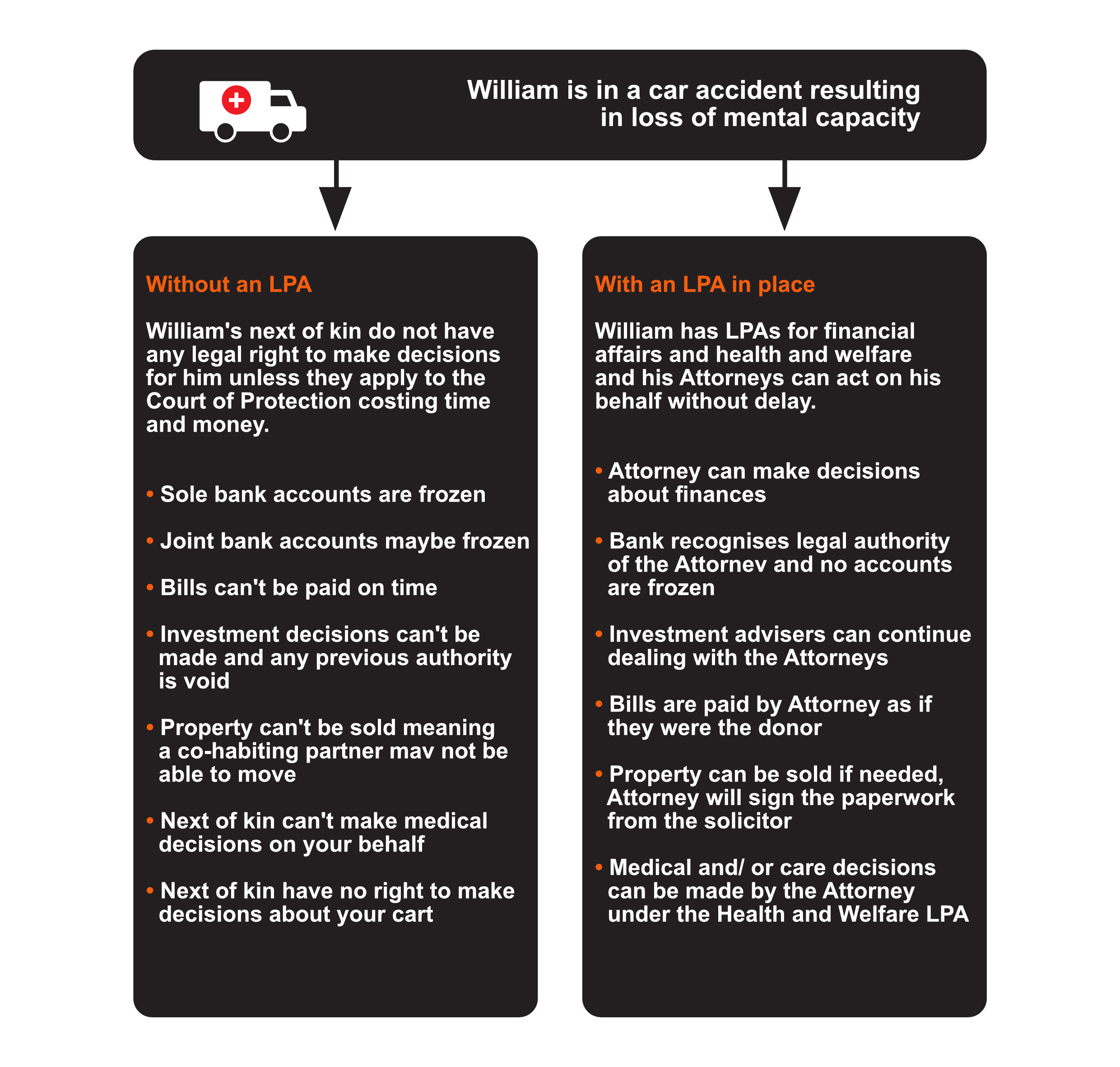
A Lasting Power of Attorney (LPA) is a legal document that allows you (the ‘Donor’) to appoint one or more individuals (your ‘Attorneys’) to make decisions on your behalf. Crucially, this authority continues if you lose the mental capacity to make decisions yourself, hence the term “lasting.”
There are two types of LPA, and you may choose to make one or both:
1. LPA for Property and Financial Affairs
This LPA authorises your Attorney(s) to manage your financial matters, including:
• Paying bills
• Managing bank accounts and investments
• Arranging and collecting benefits
• Buying, selling, or maintaining property
This type of LPA can be used as soon as it is registered, even if you still have mental capacity.
2. LPA for Health and Welfare
This LPA allows your Attorney(s) to make decisions about your personal welfare, such as:
• Day-to-day care
• Medical treatment
• Living arrangements
You can also authorise them to make decisions about life-sustaining treatment. This type of LPA can only be used if you lose mental capacity.
Why is it important to have an LPA?
Without an LPA, if you become mentally incapable, due to illness or an accident, your loved ones cannot automatically manage your affairs.
Instead, they must apply to the Court of Protection for a Deputyship order, which is often a lengthy, complex, and expensive process. It may also result in decisions that don’t align with your wishes.
In the absence of a Health & Welfare LPA, medical decisions will be made by professionals, regardless of your preferences or those of your family.
By setting up an LPA, you retain control by choosing who will act in your best interests should you no longer be able to make decisions for yourself.